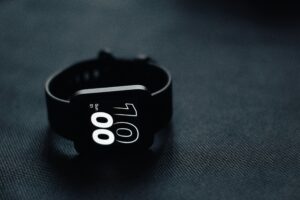
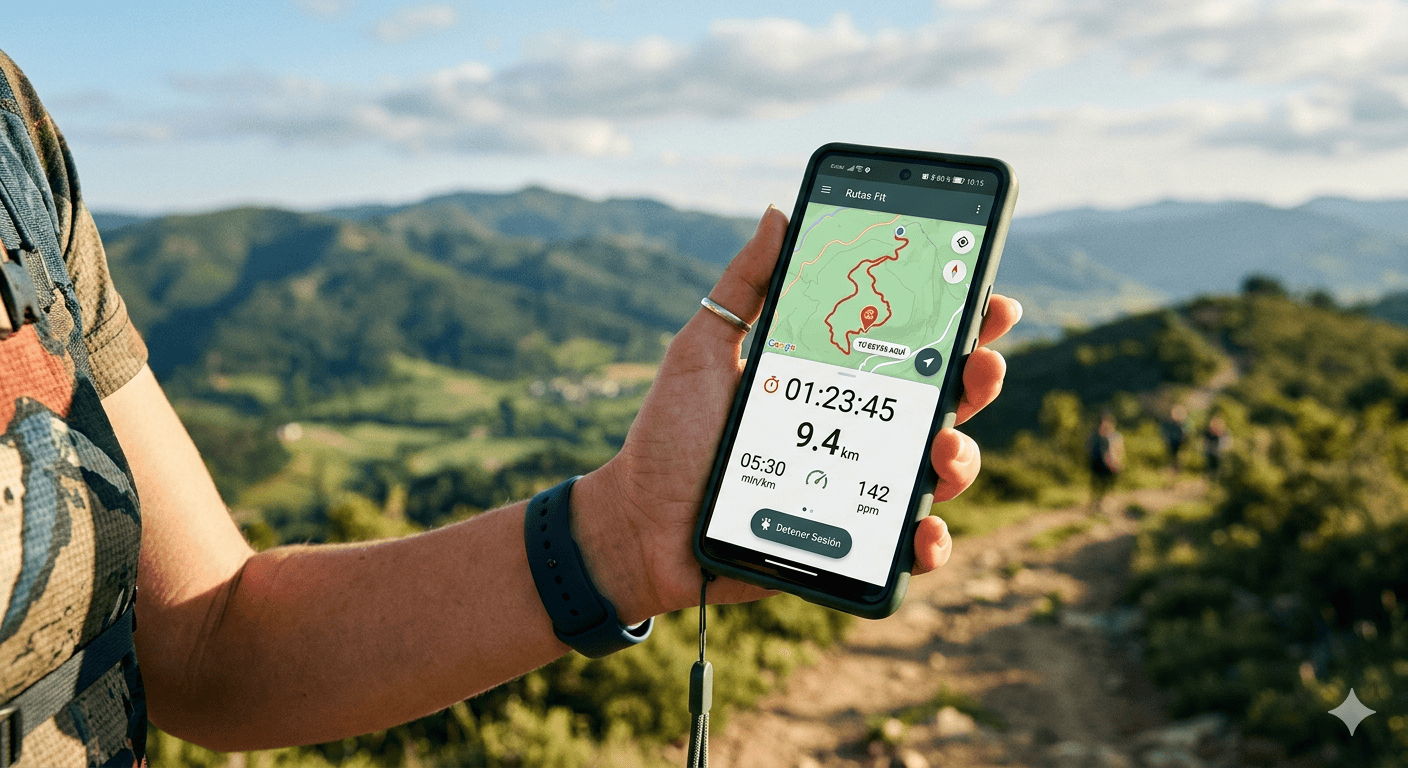
Fitness trackers have been around for decades. But in 2026, there’s a fundamental divide in the market between traditional fitness trackers that count steps and record workouts — and AI-powered trackers that analyze your data, learn your patterns, and tell you what to actually do with that information.
AI fitness trackers are transforming the way people monitor their health in 2026. But how do they compare to traditional fitness trackers? In this guide we break down the real differences in accuracy, features, price and long-term value so you can make the right choice for your health goals.
Which one is worth your money? We break down the real differences so you can make the right choice for your health goals and budget.
What Is a Traditional Fitness Tracker?
Traditional fitness trackers — think early Fitbits, basic pedometers, and entry-level smartwatches — do a straightforward job. They record data.
Steps taken. Calories burned. Heart rate. Distance covered. Floors climbed.
That data goes into an app. You look at it. Maybe you feel motivated. Maybe you don’t. The tracker doesn’t tell you what the data means or what to do differently. That interpretation is entirely up to you.
Examples of traditional fitness trackers:
- Basic Fitbit models
- Garmin entry-level watches
- Simple pedometers
- Early Apple Watch models
What Is an AI Fitness Tracker?
AI fitness trackers collect the same raw data as traditional trackers — but then run it through machine learning algorithms that learn your personal patterns over time.
Instead of just showing you that you slept 6.5 hours last night, an AI tracker tells you that based on your personal data, sleeping less than 7 hours increases your resting heart rate by 8 beats per minute and reduces your next-day performance by approximately 15%.
Instead of just recording that you ran 5km, it tells you whether that run was too easy, too hard, or exactly right given your current recovery status — and adjusts tomorrow’s recommended training accordingly.
Examples of AI fitness trackers:
- Oura Ring
- Whoop 4.0
- Apple Watch Series 10 with AI Health features
- Garmin with Body Battery AI
- Eight Sleep Pod 4
Head-to-Head Comparison
Accuracy
Traditional trackers: Reasonably accurate for step counting and basic heart rate monitoring. Less accurate for calorie burn estimation, sleep staging, and stress measurement.
AI trackers: Significantly more accurate across all metrics because they calibrate to your personal baseline rather than population averages. An AI tracker learns that your resting heart rate is naturally 52bpm, so it doesn’t flag it as abnormally low — whereas a traditional tracker might.
Winner: AI trackers — personalized calibration produces meaningfully more accurate data.
Actionable Insights
Traditional trackers: Show you data. Interpretation is your responsibility. Most people look at the numbers, feel vaguely informed, and change nothing about their behavior.
AI trackers: Tell you what your data means and what to do about it. Specific, personalized recommendations like “your recovery score is 34% today — keep today’s workout to light activity” or “you’ve had three consecutive nights of poor deep sleep — try moving your bedtime 30 minutes earlier.”
Winner: AI trackers — by a significant margin. Data without interpretation rarely changes behavior.
Price
Traditional trackers: $30–$150 for most models. Low ongoing cost.
AI trackers: $150–$500+ for hardware. Many require monthly subscriptions of $5–$30/month on top of the device cost.
Winner: Traditional trackers — significantly more affordable upfront and ongoing.
Battery Life
Traditional trackers: Typically 5–14 days per charge. Some basic models last months.
AI trackers: More processing power means more battery drain. Most AI trackers last 4–7 days. Some like Whoop require more frequent charging.
Winner: Traditional trackers — longer battery life for most models.
Learning Curve
Traditional trackers: Minimal. Strap it on, open the app, see your steps. Anyone can use one immediately.
AI trackers: Require 2–4 weeks of consistent wear before the AI has enough personal data to provide accurate recommendations. The first month can feel underwhelming before the personalization kicks in.
Winner: Traditional trackers — simpler and more immediately useful for beginners.
Long-Term Value
Traditional trackers: Provide roughly the same value on day one as they do on day 365. The data doesn’t get smarter over time.
AI trackers: Become significantly more valuable the longer you use them. The AI accumulates months of personal data and its recommendations become increasingly precise and personalized. A Whoop or Oura worn for 12 months is a fundamentally more powerful tool than one worn for 12 days.
Winner: AI trackers — compound value over time is a significant advantage.
Privacy
Traditional trackers: Collect less data and generally have simpler privacy policies.
AI trackers: Collect significantly more detailed health data — including sleep patterns, heart rate variability, body temperature, and stress levels. Review the privacy policy of any AI health tracker carefully before purchasing.
Winner: Traditional trackers — less data collection means less privacy risk.
Who Should Choose a Traditional Fitness Tracker
A traditional fitness tracker is the right choice if:
- You’re new to fitness tracking and want to start simple
- Your budget is under $100
- You primarily want to track steps and basic activity
- You prefer to interpret your own data
- You’re concerned about health data privacy
- You want a device that works well immediately without a learning period
Best traditional tracker in 2026: Fitbit Inspire 3 ($99) — accurate, simple, excellent battery life, and the app is genuinely useful for basic fitness tracking.
Who Should Choose an AI Fitness Tracker
An AI fitness tracker is the right choice if:
- You’re serious about optimizing your health and performance
- You want personalized recommendations, not just raw data
- You’re willing to invest $200+ for better insights
- You’ll wear the device consistently for months
- You train regularly and want to avoid overtraining
- You struggle with sleep and want detailed analysis
Best AI tracker in 2026: Oura Ring Generation 4 ($349 + $5.99/month) for overall health optimization, or Whoop 4.0 ($30/month) for athletes focused on training performance.
Check the latest price of the Oura Ring on Amazon
The Hybrid Approach
The most effective strategy for many people is combining both:
- A traditional tracker for basic daily activity monitoring
- An AI app like Sleep Cycle or Bearable that adds AI analysis on top of your existing data
This approach gives you AI-level insights at a fraction of the cost of a dedicated AI wearable.
The Honest Bottom Line
| Factor | Traditional | AI |
|---|---|---|
| Price | ✅ Much cheaper | ❌ Expensive |
| Accuracy | ⚠️ Good | ✅ Excellent |
| Actionable insights | ❌ Minimal | ✅ Comprehensive |
| Battery life | ✅ Longer | ⚠️ Shorter |
| Ease of use | ✅ Immediate | ⚠️ Learning curve |
| Long-term value | ⚠️ Static | ✅ Compounds over time |
| Privacy | ✅ Less data | ⚠️ More data collected |
Final Thoughts
Traditional fitness trackers tell you what happened. AI fitness trackers tell you what it means and what to do next.
If you’re just starting your health journey, a traditional tracker is a perfectly solid choice. If you’re ready to take your health optimization seriously and want a tool that gets smarter the longer you use it, an AI tracker is worth the investment.
The best fitness tracker is ultimately the one you’ll wear every single day. Consistency of use matters far more than sophistication of technology.
Are you using a traditional or AI fitness tracker? Which has worked better for you? Share in the comments below.
As an Amazon Associate I earn from qualifying purchases.